



Government agencies are all feeling the strain of a rapid, unplanned shift to remote working and remote policymaking. These changes have introduced barriers to the timely management of regulations, policies, and other important agency functions. While the pandemic was the first jolt felt in government “work from home” policies, it is a larger sign of working trends to come.Numerous events, from expected life events to natural disasters all spell trouble for government agencies without dedicated remote working capabilities. Many of our clients report a high likelihood of continuing remote work after the pandemic subsides and are looking for ways to increase productivity and accountability while working from home. This blog explains how remote working can impact agencies’ policymaking process and how technology solves agency teleworking needs.
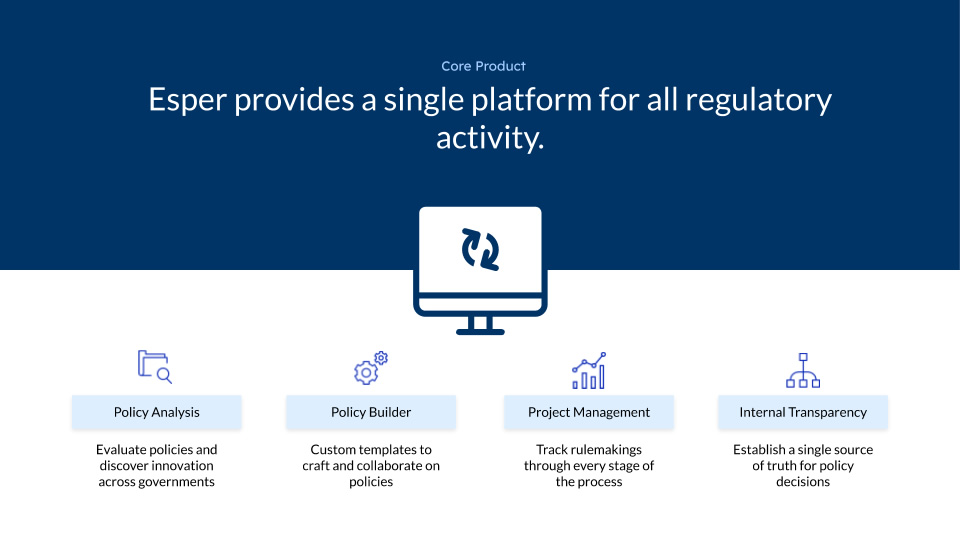
Esper helps tackle these challenges with our easy to use software. With Esper, remote policymaking simple, efficient, and effective:
- Tracking cascading federal, state, and local policy changes: Agencies are expected to monitor and respond to constantly changing federal, state, and local policies that impact them. For example, new Executive Orders or emergency legislation can significantly impact agencies and often impose tight turn around deadlines for new policies. Esper’s Discovery product provides agency staff with a live stream of the latest policy announcements that may impact them. This gives agencies more room to respond and ensures they don’t miss policies that apply to them.
- Keeping team members on the same page: Literally, with many documents floating around with new edits, policy suggestions, and notes in the margins– it’s difficult to figure out what the latest policy proposal is and who already signed off on it. This ambiguity causes delays, miscommunication, and inefficiency for policy teams. Esper automatically tracks and saves all of this information, giving you a single source of truth for all policy activity.
- Effective stakeholder collaboration: Policymaking requires many, many rounds of review and approval before the public ever lays eyes on a new policy. While these approvals may have been conducted in person in the past, getting sign off in a timely manner and in the right order becomes much more challenging as people work remotely. Esper helps you set approval workstreams and ensures policies are routed through appropriate levels of approval.
Esper enables remote policymaking, collaboration and regulatory management via its software platform. The solution provides agencies with access to project management, data management, workflow, and data analysis capabilities.


.png)

