

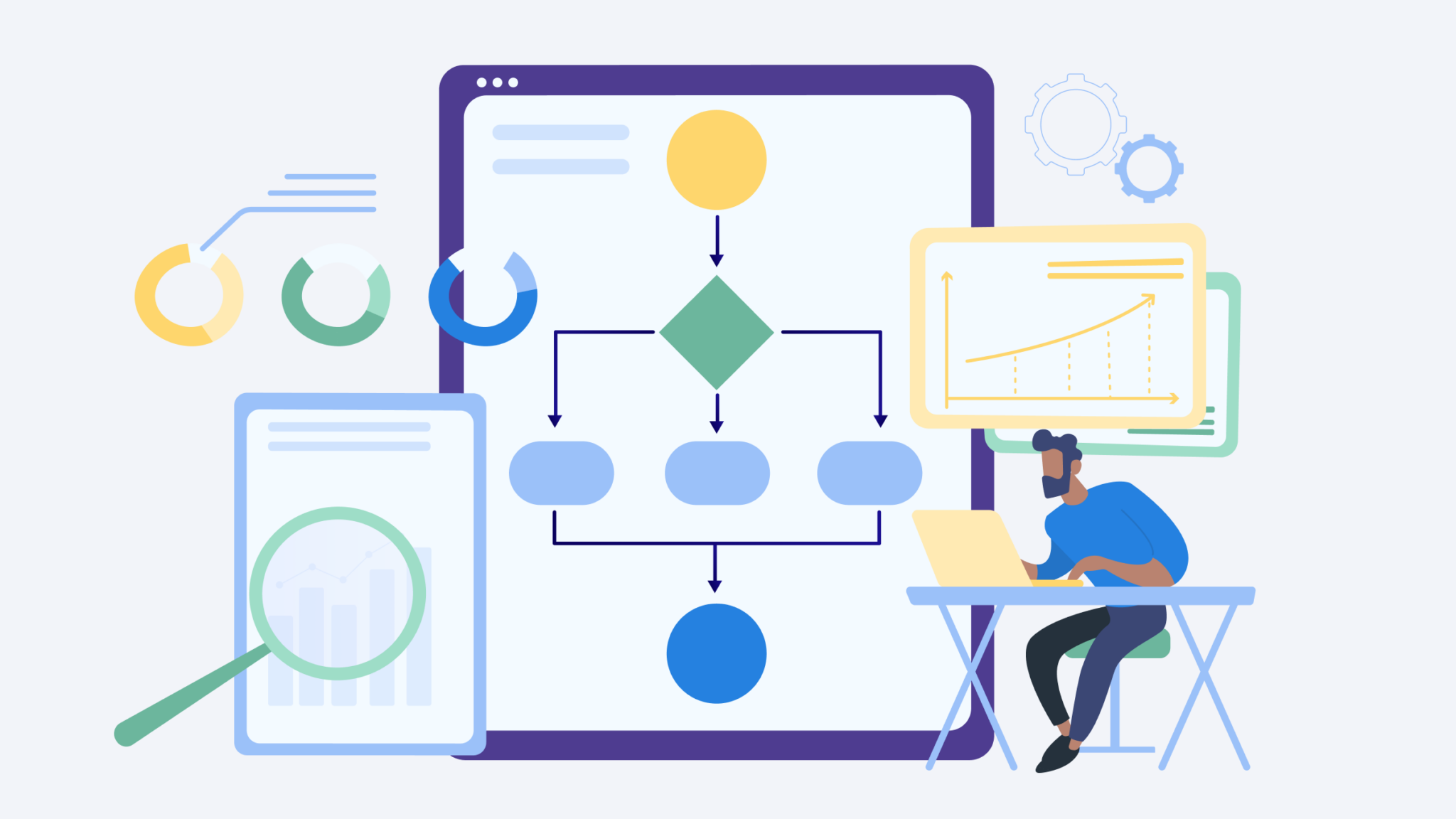

Government agencies often face the same obstacles in policymaking: approval delays, departmental silos, and paper-heavy processes. These bottlenecks don’t just slow work, they increase compliance risk and make it harder to deliver transparent, timely policy.
Workflow automation addresses these issues by automating routine, rule-based tasks such as routing, approvals, notifications, and version control. Instead of chasing signatures or searching for the latest draft, staff and leaders can work in one system of record with full visibility and accountability.
What is Government Workflow Automation?
Government workflow automation refers to the use of purpose-built technology to manage approvals, reviews, deadlines, and documentation across public-sector processes. Unlike generic automation tools, government workflow automation is designed to meet statutory timelines, audit requirements, and transparency mandates.
Why Workflow Automations Matter
Government policy teams are facing new pressures that manual workflows can no longer absorb.
Mandated review cycles are accelerating
States and agencies are now required to regularly review, update, and recertify policies on fixed timelines. Tracking hundreds of deadlines and decisions with email and spreadsheets turns routine governance into compliance risk.
Workforce attrition is eroding institutional knowledge
Policy teams are doing more work with fewer experienced staff. When processes live in inboxes or personal files, turnover creates delays, errors, and rework. Automated workflows preserve context, ownership, and history as roles change.
Audit and oversight scrutiny is increasing
Auditors and legislators want proof, not explanations. Agencies must show who reviewed a policy, when approvals occurred, and how deadlines were met. Manual tracking makes this evidence difficult to produce consistently.
Public expectations for transparency are rising
Citizens expect timely access to current policies and clarity into how decisions are made. Delays, outdated postings, or unclear processes undermine trust and invite scrutiny.
The bottom line
Workflow automation is no longer about efficiency alone. It is about resilience. Agencies that modernize now are better equipped to meet mandates, withstand audits, retain knowledge, and deliver transparent policymaking with limited resources.
What is workflow automation in government?
Government workflow automation applies technology to automate routine, rule-based tasks across the policymaking lifecycle. Instead of relying on manual routing, email reminders, and version tracking, automation ensures a complete audit trail of approvals and edits, faster task routing, and consistent processes across departments. The goal is not to replace people, but to eliminate bottlenecks that create unnecessary delays or risks.
Automation in government encompasses more than just digitizing forms or routing documents. It creates a structured environment where tasks follow a predictable path, deadlines are enforced by the system, and every action is recorded for accountability. This is particularly important in the public sector, where audits, legislative oversight, and transparency mandates require a reliable record of how decisions were made and policies were finalized. By taking the guesswork out of who is responsible for what, workflow automation supports both compliance and efficiency.
Gartner estimates that in 2024, three-fourths of governments will have launched at least three enterprise-wide hyperautomation initiatives. For policy leaders, that means automation is no longer a future trend, it’s the new baseline. Agencies that remain dependent on paper, spreadsheets, or ad hoc systems risk falling behind not only in efficiency but also in credibility with oversight bodies and the public.
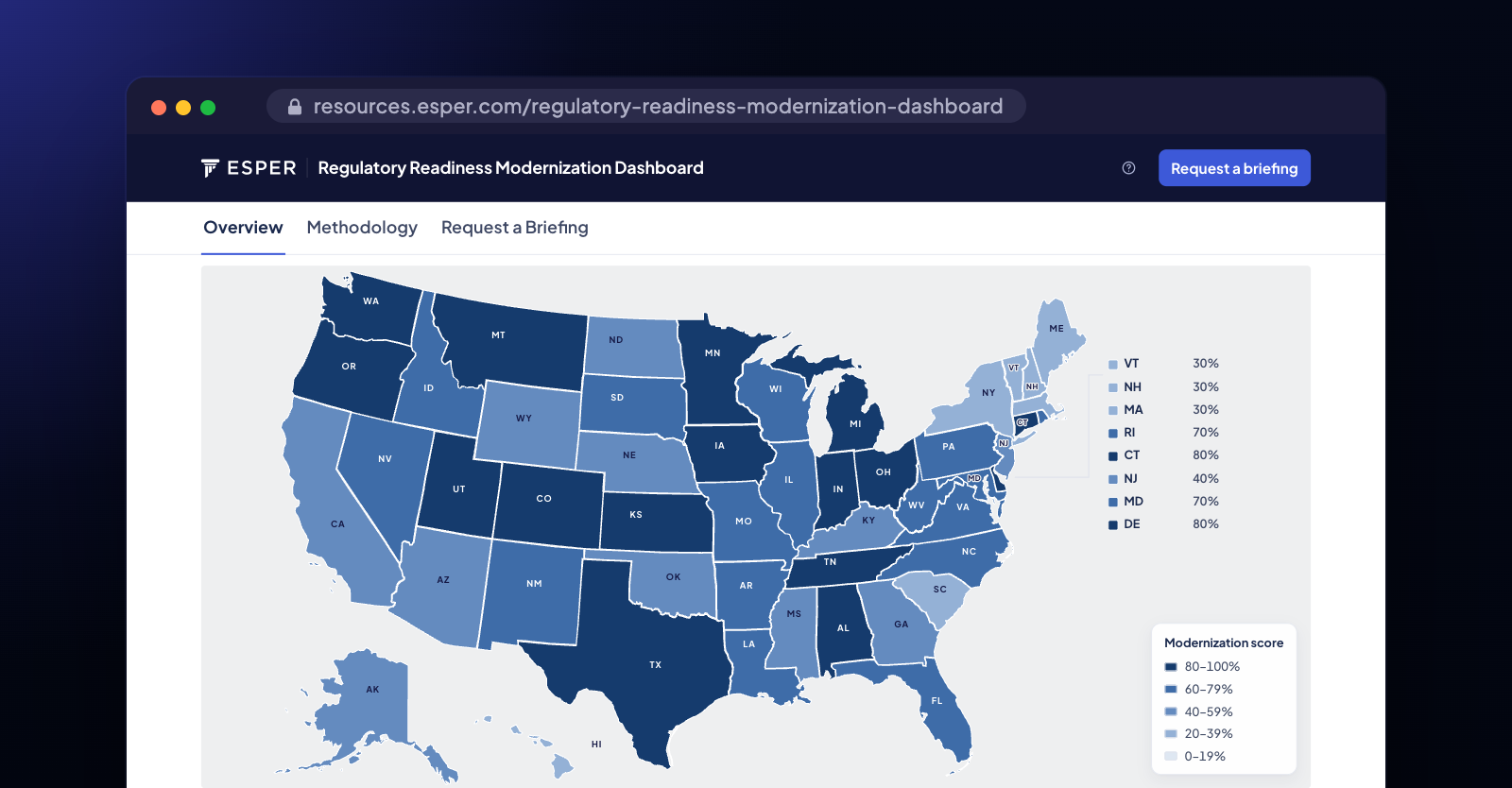
This aligns with NASCIO’s state priorities, which list legacy modernization and business process at the top of the agenda.
Understanding the concept is one thing but seeing how it delivers value is another. The benefits for project management become clear once agencies begin to automate key steps in the policy lifecycle.
Benefits for policy project management
The biggest value of automation lies in its impact on compliance, transparency, and speed. For example, automatic audit trails and version control reduce the risk of errors or findings during legislative or performance reviews. Agencies that have adopted automation consistently report shorter cycle times for both rulemaking and policy updates, since routing and deadline tracking happen automatically.
Another benefit is visibility. Leaders often describe the policymaking process as a “black box”, they know a rule is under development but cannot easily see where it is stuck or what remains to be done. With automation, shared dashboards provide real-time progress updates, replacing silos with transparency across departments. That visibility enables better planning, helps leaders anticipate bottlenecks, and ensures accountability when deadlines approach.
Perhaps most importantly, automating repetitive tasks gives staff time back for analysis and higher-value work. Instead of chasing signatures or version histories, policy contributors can focus on the content of rules and regulations. This improves staff morale while also delivering better policy outcomes for citizens. Automation doesn’t eliminate human judgment, it ensures that judgment is applied where it matters most.
Knowing the benefits is useful, but the contrast between manual and automated processes makes the case even clearer. By looking at both side by side, the stakes come into focus.
From manual to automated workflows
Manual policymaking workflows often rely on paper and email to pass drafts between staff, creating multiple versions of the same document with errors and inconsistencies. Staff end up digging through email for the “latest” draft, while leaders depend on manual notifications to know when something needs their attention. These delays compound as policies move through complex approval processes, increasing the risk of missed deadlines and compliance failures.
With automation, stakeholders are automatically assigned when tasks are ready, approvals and edits are logged in a single record, and leaders receive instant notifications on desktop or mobile. Cross-agency reviews are tracked in one place, so policy changes no longer get stuck between offices. This shift reduces missed deadlines, improves coordination, and strengthens public transparency.
The difference is particularly stark in large agencies or across multi-agency collaborations. In a manual system, every new stakeholder increases the likelihood of delays. In an automated system, adding stakeholders is simply a matter of defining roles and permissions. The system handles the routing, reminders, and escalation if deadlines are missed. This not only shortens the time required to finalize policies but also reduces the frustration and finger-pointing that often accompany manual reviews.
It helps to see how these ideas work in practice. Several states have already implemented automated workflows with measurable results.
Examples from the field
Iowa
In Iowa, the Professional Licensing & Regulation Bureau and its partners now track projects, stakeholder assignments, and due dates automatically, using a centralized platform. Before automation, each department kept separate spreadsheets and relied on email to move drafts forward. Staff often spent days searching for the correct version of a document. Now, every draft, comment, and approval is tracked in one system. Leaders can see progress in real time and step in before a deadline is missed.
Tennessee
In Tennessee’s Executive Branch, workflow automation reduced the time required for rule review and coordination across departments. The state previously struggled with rules getting stuck in departmental silos, which created uncertainty and tension among teams. With Esper, every agency involved in a rule can see its current status and who is responsible for the next step. This has cut review times significantly while improving collaboration between legal, policy, and operational staff.
Montana
The Montana Secretary of State used workflow automation to reduce publishing timelines. Montana law requires that new rules be published promptly, but legacy processes made it difficult to meet deadlines consistently. Automation now standardizes every step of rulemaking, from drafting through public posting. This consistency not only improves efficiency but also strengthens public trust by ensuring that rules are published on schedule.
For CalFIRE, coordinating safety policies across multiple units used to be a logistical challenge. Each unit had its own review process, and central staff often had to reconcile conflicting versions. Automation has brought these processes into alignment. Policies now move through a shared workflow that assigns responsibilities clearly and documents every edit. This allows CalFIRE to implement safety policies faster and with greater confidence that all units are aligned.
These examples show that automation is not one-size-fits-all. It adapts to the specific pain points of each agency. What unites them is the outcome: faster timelines, stronger compliance, and more transparent policymaking.
Understanding how peer agencies are applying automation sets the stage for a deeper look at the tools themselves. Esper’s platform brings these workflows together in a single environment.
Overcoming the hurdles of legacy policymaking with automated workflows
A survey from the National Association of State Chief Information Officers (NASCIO) listed legacy modernization and business process improvement among the highest priorities of state CIOs for 2023. As legacy policymaking workflows often rely on paper, they create multiple versions of the same document, which could lead to errors and inconsistencies. This absence of version control, combined with departmental silos and a lack of communication, often has policy coordinators going through their emails to find the latest version of a document.
Legacy systems can create an inefficient review process where policy owners and agency leaders must be manually notified of status changes, leading to unnecessary delays, confusion and a lack of synchronization. Manual processes also fail to properly track ownership, history and deadlines. Moving through complex workflows in this manner results in longer timelines and a reluctance to implement changes.
At Esper, we help government organizations reduce the time needed to complete a policymaking lifecycle by 25% through automated, standardized workflows. Adopting our policy management platform initiates a discovery phase in which our Professional Services team maps out every stage of an agency's existing workflows and business processes.
This phase involves pinpointing the internal stakeholders for each workflow, their access permissions, the necessary approval procedures and document templates. All workflow tasks are also pre-configured into the policy management tool, and our experts collaborate with agency partners to digitize and automate each step of their workflows.
Our top uses of workflow automation in government policymaking
With Esper, you can streamline all your policy workflows. Here’s how:
- Given the sequential nature of policymaking tasks, the Esper platform enables you to manage stakeholder assignments, due date setting and project progress tracking. Tasks within a stage are denoted with green (complete), yellow (in progress) and red (waiting to begin). When a task is completed, the stakeholder responsible for the next one is automatically notified, and the process seamlesslessly moves along.
- User permissions for involved stakeholders can be configured in advance for all workflows, ensuring the right people are assigned to each task.
- If a policy requires further edits or changes, the drafting task is reintroduced into the workflow. The initial drafter is promptly notified via email or an in-platform alert, and any dependent tasks downstream are temporarily halted.
- The government workflow management software also extends its automation capabilities to the review process. For instance, if a policy necessitates approval from the governor's or attorney general’s office, Esper facilitates this inter-agency step and tracks its status.
Where to start
Most agencies begin by automating approvals and deadline tracking, then expand to cross-agency reviews and public publishing. A maturity model looks like this:
- Manual: Processes depend on email, paper, and spreadsheets. Staff spend significant time chasing updates, and leaders have limited visibility into progress.
- Semi-automated: Agencies introduce partial tracking or notification tools. This reduces some inefficiencies but often results in a patchwork of disconnected systems.
- Automated: The full policy lifecycle is managed in a single system of record. Tasks are routed automatically, progress is visible in real time, and every action is documented for compliance.
Agencies often begin with a discovery phase, mapping current processes and identifying common pain points. This might involve tracking how long approvals take, how often drafts are misplaced, or how many times a policy is revised. Once the data is clear, automation can be introduced gradually, starting with the most time-consuming or error-prone steps. This phased approach helps staff build confidence and reduces the resistance that can accompany large-scale changes.
As agencies mature in their use of automation, they often expand into more complex workflows. For example, an agency might begin with internal approvals, then extend automation to legal reviews, then integrate public comment periods, and finally manage publication. Each stage builds on the last, creating a comprehensive system of record that covers the full lifecycle of policy development and implementation.
The benefits of automation are best understood through results. Real-world agency outcomes demonstrate how these tools pay off in practice.
How automated workflows change policy project management
Automated workflows remove the manual coordination that slows policymaking down. Work moves forward automatically, progress is visible in real time, and accountability is built in.
Fewer missed deadlines
Deadlines are tracked by the system, not individuals. Delays are visible early, giving leaders time to act before timelines slip.
No status chasing or manual follow-ups
Tasks route themselves to the next reviewer. Approvals, edits, and handoffs happen without reminder emails or spreadsheet tracking.
Predictable progress, even across agencies
Leaders can see what’s complete, what’s in progress, and what’s next. Policymaking shifts from a black box to a managed process.
Audit-ready by default
Every action is recorded automatically, creating a clear, defensible record without extra work from staff.
The result is a policymaking process that is easier to manage, easier to defend, and far more reliable. The complexity stays behind the scenes while teams experience clearer ownership, faster movement, and fewer surprises.
Frequently asked questions
How does workflow automation support audits?
Workflow automation creates a complete, time-stamped record of every action taken on a policy, from initial drafting to final approval. This audit trail makes it easy to demonstrate compliance during legislative reviews, inspector general investigations, or internal audits.
Can automation adapt to legislative deadlines?
Yes. Automated workflows can be configured with deadline triggers that escalate tasks if they are not completed on time. This helps ensure agencies meet statutory or regulatory deadlines without last-minute scrambles.
What if multiple agencies are involved in one policy?
Cross-agency collaboration is one of the areas where manual processes fail most often. With automation, roles and permissions can be defined across multiple agencies, ensuring that each stakeholder has access to the same workflow and that progress is visible in one shared system.
How difficult is implementation?
Implementation typically takes less than three months. Esper works with agencies during a discovery phase to map existing workflows, configure templates, and set up permissions. Because the platform is designed specifically for policymaking, configuration is faster and less resource-intensive than adapting a generic workflow tool.
Can the system be customized to our agency’s needs?
Yes. Esper workflows are configurable to match the unique steps, roles, and templates used by each agency. This ensures that automation reflects how your agency already works, while introducing consistency and accountability across teams.
Does automation replace staff roles?
No. Automation is designed to reduce repetitive administrative work, not replace people. Staff remain responsible for drafting, analysis, and decision-making, while the system handles notifications, routing, and recordkeeping. The result is a better use of staff expertise and more reliable policy outcomes.
How does automation affect transparency with the public?
Automation strengthens transparency by ensuring that every step in the policymaking process is documented and traceable. It also supports faster public publishing of rules and policies, using ADA-compliant templates that make information accessible to all citizens.


.png)

