
Rulemaking process enhancements drive TCEQ partnership with Esper


The Texas Commission on Environmental Quality (TCEQ) is the environmental agency for the State of Texas. TCEQ’s mission is to protect the state’s public health and natural resources consistent with sustainable economic development. To accomplish this mission, TCEQ strives to ensure that regulations are necessary, effective and current and apply regulations clearly and consistently across the state.
In order to make sure their rulemaking processes meet the agency’s overarching mission, TCEQ was looking to find an innovative technology solution to modernize this critical work. This led to a partnership with Esper— a leading provider of cloud-based rulemaking and policy lifecycle management software.
TCEQ now uses Esper to automate the agency’s primary rulemaking workflow, provide configurable rulemaking document templates, promote better internal collaboration with robust rulemaking drafting tools, streamline federal and state regulatory research and provide project management tools to ensure rulemaking projects are completed on time.
Configurable rulemaking workflow
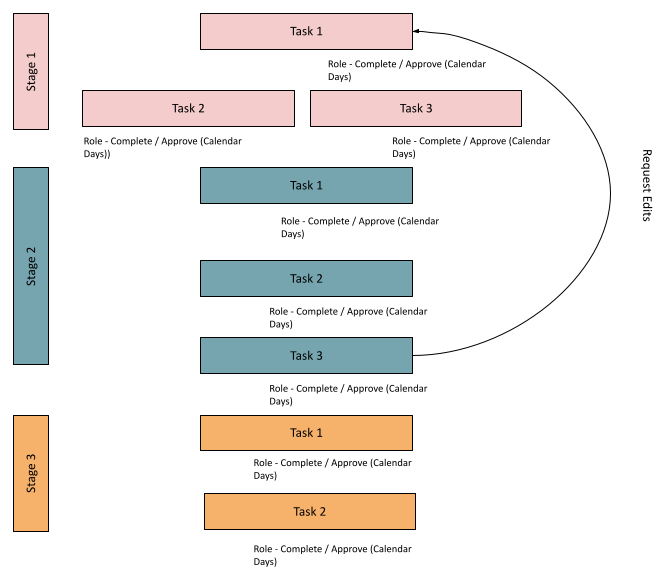
TCEQ needed a partner to digitize their primary rulemaking workflow, which consists of nine different stages with various review and approval tasks.
Esper automates this workflow for the agency, ensuring that the roughly 30 agency staff responsible are notified when they’re required to comment, review or approve a rulemaking. TCEQ’s rulemaking stakeholders can then mark their work as completed, moving the project to the next stage.
User permissions are configurable, depending on the level of work of each user. TCEQ also has the ability to edit these permissions by an administrator.
Rulemaking document templates
Esper adds 11 configurable rulemaking document templates for TCEQ staff to work off of. These templates are built directly into the workflow, so when a new rulemaking project is created all required documents will populate.
Every document required for a rulemaking—from proposal to adoption—is configurable, including the agency’s Concept Memo all the way through their Adoption Order.
Esper's robust document drafting tool allows stakeholders to collaborate on these documents in real-time, leave comments and approve completed sections. Since Esper's rulemaking management solution is cloud-based, multiple staff members can work on a document at the same time. Esper also keeps track of all version histories right in the software, allowing TCEQ to house institutional knowledge in one place.
Key operational insights for TCEQ
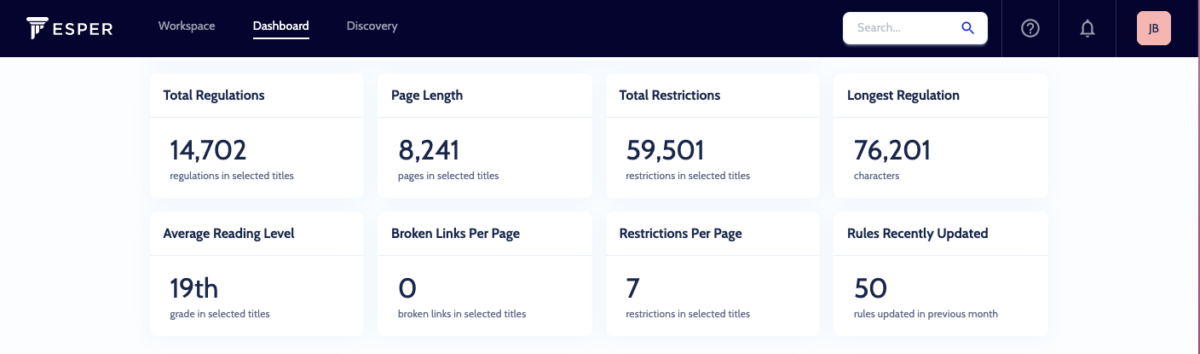
Esper is able to visualize all current and historical rulemaking work for TCEQ. This ensures agency leadership can quickly review the status of an ongoing rulemaking, review historical rulemakings and analyze key insights on all of their regulations—including average reading level, average length and if there are any repealed references in their regulations.
To learn more about how Esper can support your agency's rulemaking, request a demo.

Explore More Customer Stories
View all


Frequently Asked Questions
Esper’s Regulation & Code Management module is a platform that moves rulemaking and regulatory drafting out of disconnected tools (spreadsheets, emails, shared drives) and into a unified, auditable workflow. It supports collaborative drafting, version control, automated publishing, compliance deadlines, and AI-powered search across your regulations. Esper
Esper is primarily targeted at government agencies (state, local, regulatory bodies) that must manage, publish, and enforce rules, codes, or regulations. It helps modernize the regulatory process in a transparent, auditable fashion.
Some of the core features include:
- Collaborative drafting with versioning and redlines
- Workflow and approval routing (assign owners, set deadlines, send reminders)
- Automated publishing in appropriate formats
- AI-enabled search to quickly find portions of regulations with citation support
- Task management and visibility into bottlenecks
Esper maintains all drafts, redlines, and versions within a single system. That ensures every change is tracked, auditable, and tied to the appropriate approval steps, so stakeholders can always see “who changed what when.”
Every rulemaking task (e.g. drafting, review, public comment, approval) is assigned an owner and due date. The system sends reminders, tracks overdue items, and makes bottlenecks visible so leadership can intervene.
Powering the future of government knowledge

